
Thanksgiving Cooking Activities That Build Executive Functioning Skills
Thanksgiving is a time for family traditions, delicious food, and gratitude. It can also be a great time to help your child build their executive functioning skills. Following recipes, organizing ingredients, and planning a holiday meal can help children develop time management, working memory, organization, and other important executive functioning skills. Children with ADHD, learning disabilities, or executive functioning challenges can especially benefit from these activities.
Try some of the Thanksgiving cooking ideas below while enjoying this special time with your child.
Create a Thanksgiving Menu to Strengthen Organization and Planning Skills
Before Thanksgiving, encourage your child to help you plan the holiday menu. Start by asking them which dish they’d like to help you prepare, like sweet potato pie, mashed potatoes, or cranberry sauce. Then ask which ingredients they will need, how long they expect the recipe to take, and what steps are involved in preparing the dish.
For younger children, give them a few recipes to choose from; older children can do their own research and come up with a recipe they’d like to make. You might even ask your older child to pick two recipes and compare the ingredients needed, level of challenge, and preparation times for both options before picking one.
Planning a Thanksgiving menu helps your child develop organization, prioritization, and decision-making skills while learning to think ahead.
Create a Grocery List to Practice Planning and Working Memory Skills
Once your child has selected the recipe they want to make, have them create a grocery list of the ingredients they will need. Before going to the supermarket, they should check your kitchen to see which items you already have and which ones you need to buy.
To further develop your child’s organizational skills, create a grocery list template with categories such as fruits, vegetables, baking supplies, and spices. Have your child place each ingredient they need in the appropriate category.
Older children can estimate the quantities they will need when doubling or tripling a recipe, compare prices at the supermarket, or calculate sale prices.
Creating a grocery list gives your child an opportunity to strengthen their working memory, organization, planning, and attention to detail skills.
Follow a Recipe to Strengthen Sequencing and Working Memory Skills
When following a recipe, children need to read directions, remember information, and complete steps in the correct sequence. For those with ADHD or executive functioning challenges, this task can be particularly difficult.
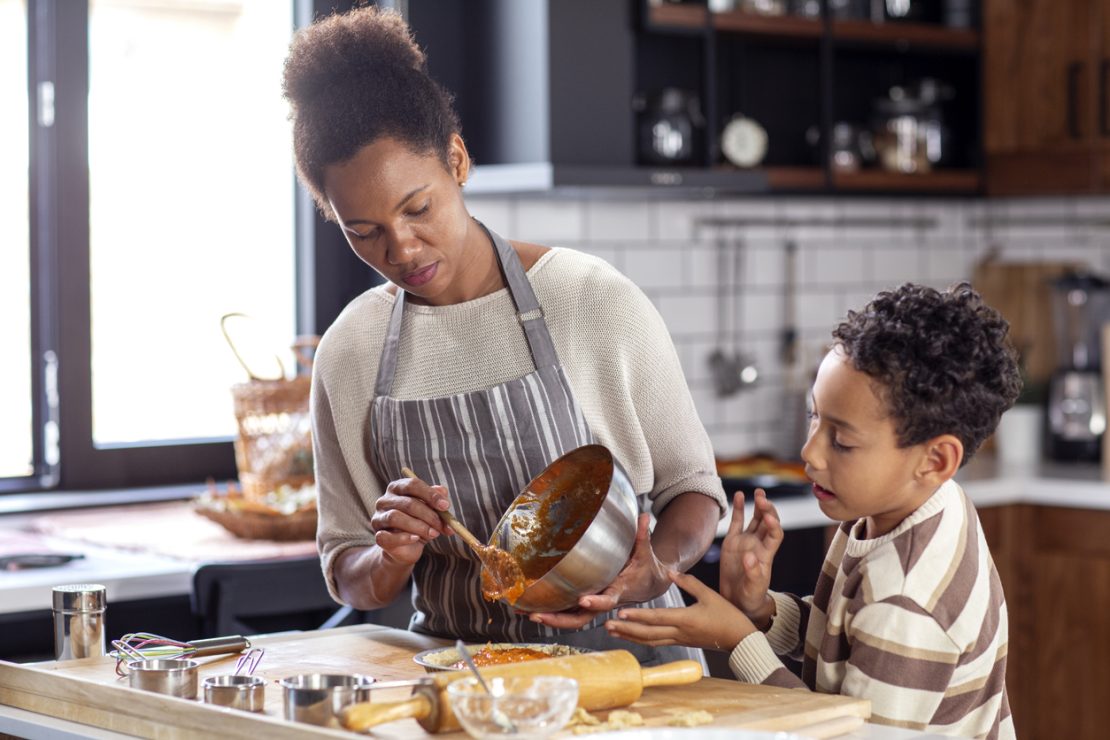
Once you select a recipe to prepare together, have your child read the entire recipe and explain each step, including what they will need to do.
For younger children or those who struggle with working memory, create a visual checklist of the recipe steps and have them check off each step as they complete it.
Following a recipe helps your child build sequencing, sustained attention, working memory, and task completion skills.
Organize Ingredients to Build Planning and Task Initiation Skills
Children with executive functioning challenges often struggle with getting started on tasks, even when they understand what they need to do. Cooking provides an opportunity to practice task initiation in a structured, hands-on setting.
Before preparing a Thanksgiving dish, ask your child to gather all the cooking tools and ingredients they will need. Have them arrange the items on the kitchen counter in the order they will be used. You can also ask them to group similar items together, such as measuring tools, mixing utensils, dry ingredients, and wet ingredients.
By gathering and arranging ingredients before cooking, your child can strengthen their task initiation, planning, organization, and sequencing skills.
Use a Cooking Timer to Develop Time Management Skills
Time management is an executive functioning skill that many children struggle with, especially those with ADHD, learning disabilities, or other executive functioning challenges. Thanksgiving cooking offers your child an opportunity to practice estimating time, monitoring recipe progress, and completing tasks within a specified period.
Start by asking your child to estimate how long they think a certain recipe will take to complete. Then have them track how long the recipe actually takes and compare the actual time with their estimate.
Your child can use a visual timer, kitchen timer, or smartphone timer to monitor how much time has passed. This exercise helps develop time management, planning, self-monitoring, and time estimation skills.
Handle Cooking Mistakes to Practice Flexible Thinking and Problem-Solving
Sometimes Thanksgiving cooking doesn’t go as planned. You might be missing some ingredients for your recipe; you may accidentally overcook a dish; or a recipe may not turn out exactly as anticipated.
Working through unexpected cooking challenges helps your child develop cognitive flexibility, emotional regulation, and problem-solving skills. For children who become easily frustrated when tasks don’t go as planned, cooking can offer a supportive environment for learning how to adjust plans when needed.
For example, when cooking, if your child realizes that an ingredient is missing, ask them questions like:
- What can we use instead?
- Is there another way we can make this recipe?
- How can we best solve this problem?
Help your child share their ideas for possible solutions before you offer suggestions. Working through unexpected cooking challenges helps your child develop cognitive flexibility, emotional regulation, and problem-solving skills.
Clean Up the Kitchen to Build Organization and Task Completion Skills
Cleaning up after cooking is another opportunity to practice organization, an important executive functioning skill. After preparing a Thanksgiving dish, have your child help clean and organize the cooking area.
Ask them which ingredients should be put away (and where), which utensils need to be washed, and which surfaces need to be cleaned.
For younger children, you can give them a visual checklist with pictures in the order of what needs to be done. Older children can come up with their own cleanup plan and decide the order in which tasks should be completed.
Cleaning up after cooking reinforces organization, sequencing, task completion, and self-monitoring while teaching your child to take responsibility for their workspace.
Closing Thoughts
Thanksgiving is a festive time filled with fun and delicious food, but it also offers opportunities to help your child strengthen their executive functioning skills. By cooking together, you can spend meaningful time with your child while helping them develop skills that are valuable both in school and in everyday life.
EBL Coaching specializes in one-on-one in person and virtual tutoring for students in grades pre-K-12 with specialized learning needs. They use research-based, multi-sensory techniques, including the Orton Gillingham method, to develop students’ reading, writing, math, note taking, test taking, and executive functioning skills. Each student is evaluated and then receives an individualized learning plan to address their specific academic needs. Learn more at http://www.eblcoaching.com/. Dr. Emily Levy, Founder & Director, is happy to hear from anyone who is in need for their child. You may reach her thru her website, and mention you heard of her thru MotherhoodLater.